Cargo theft rarely starts with a dramatic breach. More often, it starts with a weak point everyone already knows about – the rear doors. If you need to secure trailer doors properly, the job is not just adding a lock and hoping for the best. It means addressing the exact places thieves attack first: door hardware, hasps, hinges, seals, and the habits that leave equipment exposed during normal operations.
For fleet operators, trailer managers, and carriers moving high-value freight, rear-door security is not a minor equipment detail. It is a direct control over loss exposure, claim risk, delivery integrity, and customer trust. A stolen load can trigger far more than replacement cost. It can lead to missed appointments, rejected product, higher premiums, and difficult conversations with shippers who expect tighter standards.
Why most trailer door security fails
A lot of trailer security products are built around convenience, not resistance. That matters. Basic padlocks, plastic seals, and handle-based locking devices may create a visible barrier, but visibility alone is not the same as meaningful protection.
The core problem is simple: many common solutions protect the handle mechanism while leaving the door itself vulnerable. If the attack point is not the handle, that style of security can be bypassed faster than many operators realize. A thief does not need to defeat the intended locking point if another part of the assembly bends, cuts, or gives way first.
That is why door-focused security matters. When a system locks the trailer door itself, rather than depending on external handle hardware alone, it closes off a major weakness. This is the difference between a lock that looks serious and a lock that forces a thief into a louder, slower, higher-risk attack.
What it takes to secure trailer doors properly
To secure trailer doors properly, you need to think in layers. Hardware is one layer. Procedure is another. Parking decisions, load sensitivity, and trailer type all affect what level of protection makes sense.
A dry van carrying low-theft consumer goods on short regional routes may not need the same setup as a reefer moving pharmaceuticals across multiple states with overnight dwell time. The principle is the same, though: your security standard should match the cargo risk, route profile, and time the trailer sits unattended.
Start with the door, not just the latch
The rear doors are the actual point of entry, so protection should be built around them. This sounds obvious, but many fleets still rely on systems that secure the locking bars or handles without adequately reinforcing the door opening itself.
A stronger approach uses a purpose-built locking system designed for barn doors, one that physically secures the door in a way that resists cutting, prying, drilling, and tampering. Material quality matters here. Premium steel construction, hardened components, and lock design all contribute to whether the system buys you minutes of resistance or only seconds.
In practical terms, thieves usually look for the fastest low-noise entry. If the rear-door security requires heavy tools, extended attack time, and creates obvious evidence, you have changed the risk equation. That deterrence value is real.
Choose padlocks that can survive real attacks
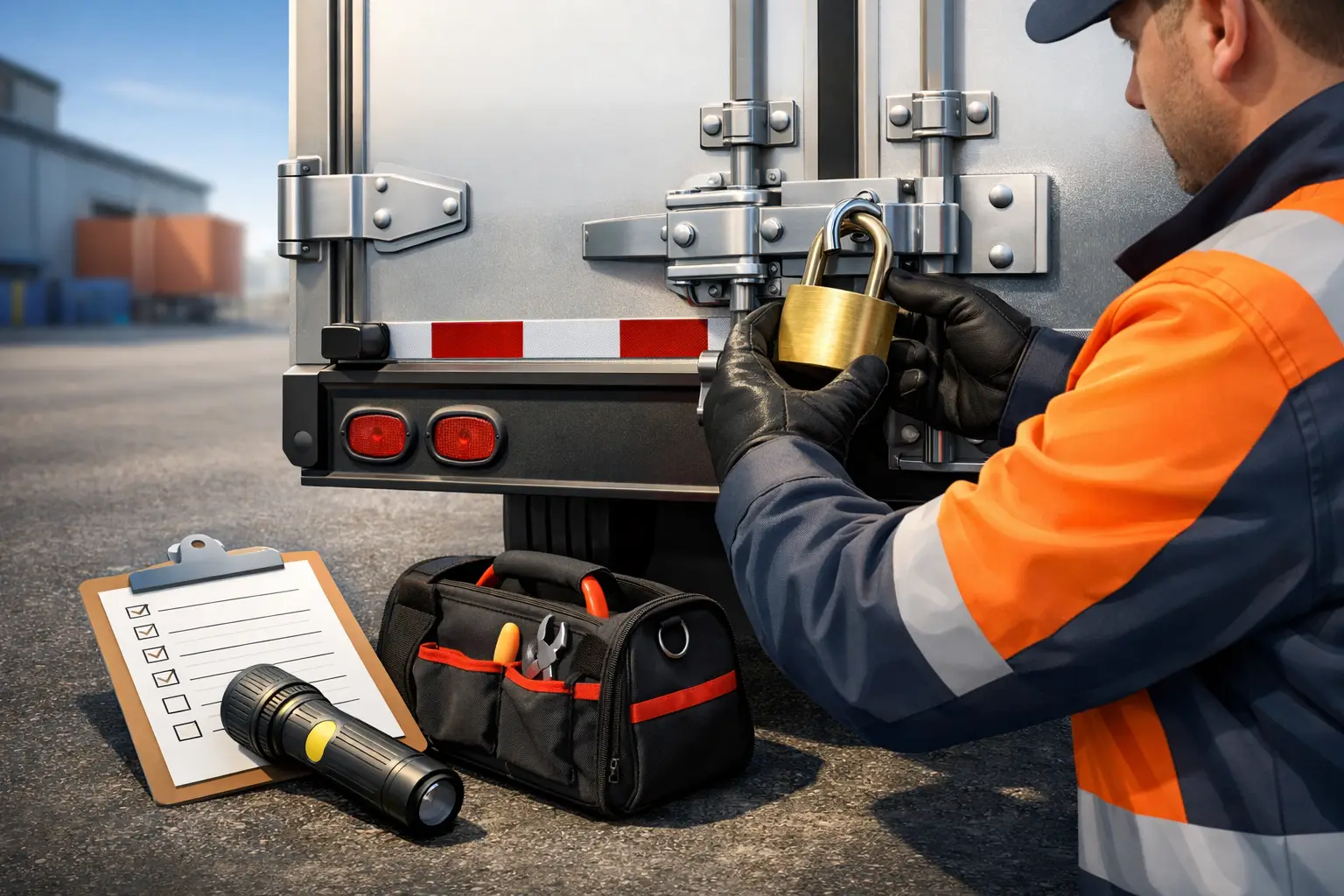
Not all padlocks belong on cargo equipment. A basic hardware-store padlock may satisfy a checklist, but it will not satisfy a serious threat environment. Trailer security requires hardened locks that resist bolt cutters, drilling, and picking.
This is one area where fleets often underinvest because the padlock looks like a simple accessory. It is not. It is a critical part of the system. If the lock body, shackle, or cylinder is weak, the rest of the setup can fail quickly. A hardened padlock engineered for commercial cargo security changes that equation.
Eliminate exposed weak points
A door is only as secure as its most vulnerable component. If a lock is strong but mounted to thin, exposed hardware, that hardware becomes the attack target. If the shackle is accessible, thieves go after the shackle. If the hasp can be peeled back, they go after the hasp.
This is why tamper-resistant design matters as much as raw material strength. The best security systems do not just add metal. They reduce access to cut points and force attacks into less practical angles. That design choice matters in parking lots, truck stops, drop yards, and warehouse perimeters where thieves want speed.
Procedures matter as much as hardware
A premium lock cannot compensate for weak operating discipline. Even strong physical security gets undermined when trailers are left open during handoffs, seals are treated as protection, or drivers assume a busy yard is a safe yard.
If you want consistent results, trailer-door security has to be part of a repeatable operating standard. That includes verifying the door is fully closed before locking, confirming the locking system is engaged correctly, documenting lock assignment, and checking for tampering at each transfer point.
For fleets, that usually means training and accountability rather than just equipment rollout. The best hardware program will underperform if one terminal uses it correctly and another treats it as optional.
Know where your exposure actually is
Some companies overfocus on in-transit theft and underestimate stationary risk. In reality, many theft events happen when trailers are parked, staged, dropped, or waiting for the next move. The longer a loaded trailer sits, especially in a predictable location, the more attractive it becomes.
That means your parking and dwell strategy should support your door security plan. High-value loads should not be left in unsecured yards when avoidable. Longer dwell times should trigger stronger controls. If a route involves repeated overnight stops, your security standard should reflect that pattern, not just the value of the trailer.
Match the lock to the trailer type
Barn-door trailers, dry vans, and refrigerated units often share similar rear-door vulnerabilities, but fit and application still matter. A lock that works on one configuration may be less effective on another if it does not account for door spacing, hardware layout, or operating conditions.
That is why purpose-built systems outperform improvised solutions. They are designed around the trailer structure, not adapted from general industrial use. In a commercial fleet, fit is not a convenience issue. A poor fit leads to inconsistent use, slower driver adoption, and more mistakes during loading and unloading.
The cost of getting it wrong
When companies fail to secure trailer doors properly, the direct loss is only the beginning. High-value cargo can disappear in minutes. Temperature-sensitive goods can become unusable if the trailer is breached. A compromised pharmaceutical or food shipment creates obvious liability, but even general freight losses can damage shipper confidence quickly.
Insurance pressure is another factor. Carriers and fleet operators are facing greater scrutiny around preventable loss. If your security posture relies on seals and basic locks, that may not look defensible after a claim. Stronger physical security supports a more credible loss-prevention position.
There is also the operational disruption. Dispatch gets pulled into recovery. Claims teams get involved. Customers want answers immediately. Drivers lose time. Replacement loads are harder to source. What looked like a single trailer event can spread across the business in a day.
A stronger standard is the real goal
Good trailer security is not about appearing secure. It is about making unauthorized entry materially harder. That means stronger steel, better lock design, fewer exposed weaknesses, and operating procedures that hold up outside of ideal conditions.
For many fleets, the right move is to stop treating rear-door security as a low-cost accessory decision and start treating it like a business protection standard. Cargo Locks USA was built around that exact reality – that serious freight needs serious physical security, especially at the door itself.
The companies that reduce theft exposure most effectively are usually not the ones with the most devices. They are the ones with a clear standard, the right hardware, and the discipline to use it every time. If your rear doors are still protected by convenience-grade solutions, that is the place to tighten first.