A stolen load rarely starts with a sophisticated attack. More often, it starts with an exposed weak point – a latch, a handle, or a basic seal that was never built to stop a determined thief. That is why a trailer door security lock matters so much. If the locking method protects the hardware around the door but not the door itself, your cargo is still one cut, pry, or twist away from being exposed.
For fleet operators, reefer carriers, and logistics teams moving high-value freight, this is not a minor equipment decision. It is a loss-prevention decision. One breach can trigger cargo claims, missed delivery windows, customer fallout, and a harder conversation with your insurer the next time renewal comes around.
What a trailer door security lock is supposed to do
A real security lock for a trailer door should do more than show evidence of entry. It should make entry materially harder, noisier, slower, and less attractive. That sounds obvious, but much of the market still relies on deterrents that are built for convenience first and resistance second.
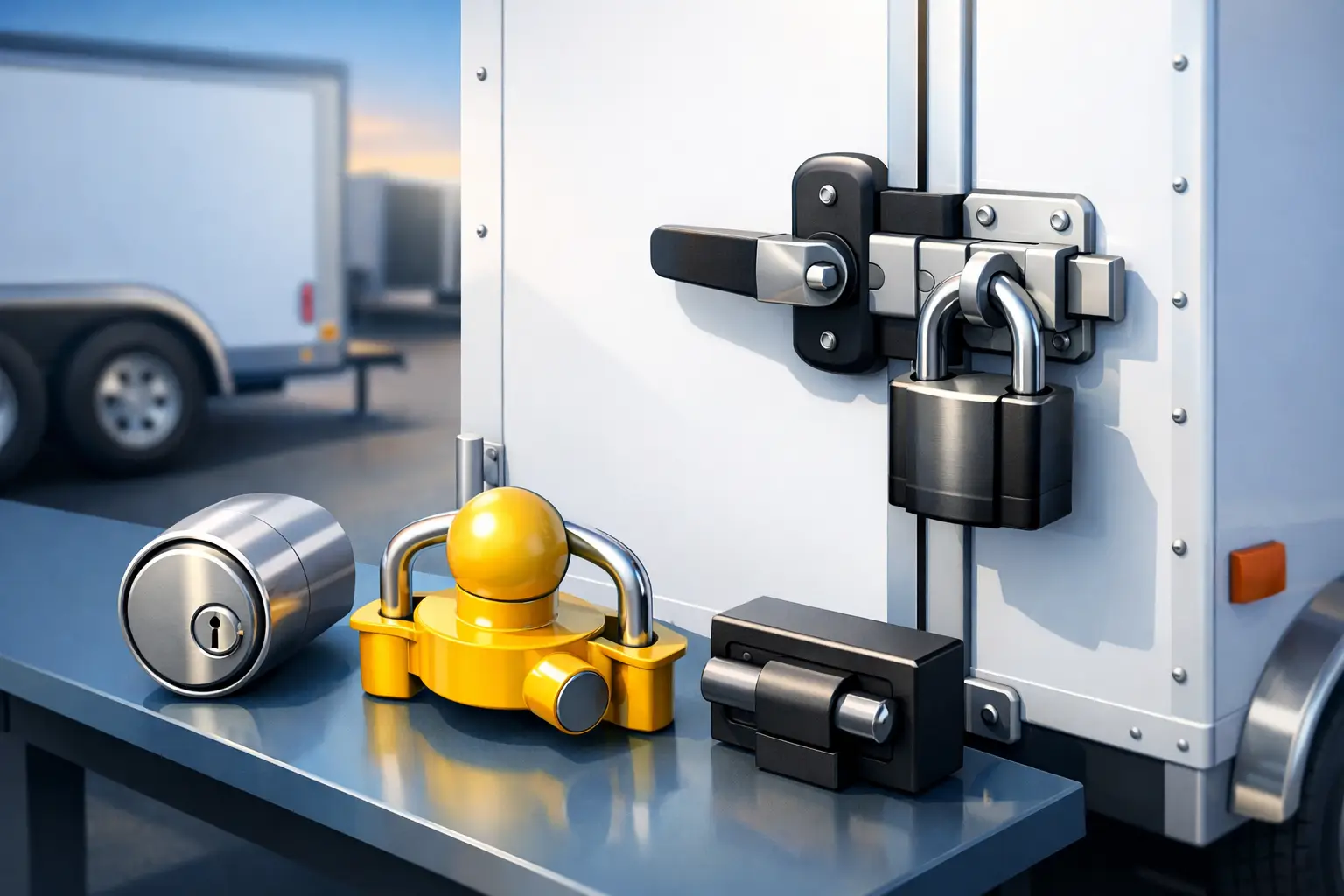
Basic plastic seals can indicate tampering, but they do not stop it. Standard padlocks add a visible layer, but if they are exposed or mounted on vulnerable hardware, they can often be cut or bypassed. Handle-based locking systems improve control at the latch point, yet many still leave the actual door assembly vulnerable. If a thief can attack the rods, hasps, or handles instead of the lock core, the security plan has already been compromised.
The better approach is to secure the trailer door itself. That changes the attack path. It forces the intruder to deal with a hardened barrier at the point of entry, rather than exploiting weaker surrounding components.
Why handle-based systems often fall short
This is where many buyers get tripped up. A lock can look substantial and still leave a major vulnerability in place. Handle-only systems may secure the door hardware, but trailer theft does not happen in a lab. It happens in yards, truck stops, drop lots, and staging areas where thieves look for the fastest mechanical failure.
If the system depends on parts that can be bent, cut, or manipulated without defeating the lock body, the visible lock becomes a false comfort. A thief does not care whether the handle is technically locked if the surrounding hardware can be attacked more easily.
That trade-off matters even more on barn-door trailers, dry vans, and refrigerated units carrying high-value goods. Pharmaceuticals, electronics, food products, and other theft-sensitive cargo all raise the stakes. In those environments, a trailer door security lock needs to do more than satisfy a checklist. It needs to hold up under deliberate attack.
The features that actually matter
When evaluating a trailer door security lock, construction details matter more than marketing language. The first question is material strength. Premium steel construction is not just a nice line in a brochure. It affects resistance to cutting, prying, and forced-entry tools used in the field.
The second question is lock exposure. If the padlock or locking point is easy to access with bolt cutters, grinders, or pry tools, the system may fail where it counts. A more serious design shields critical components and reduces access to the lock body.
The third question is how the system interacts with the trailer door. Does it secure the handle, or does it secure the door itself? That distinction is the difference between protecting a component and protecting the entry point.
Finally, consider the lock cylinder and padlock quality. Hardened, high-security padlocks that resist cutting, drilling, and picking add another layer of defense. For example, systems built around ABLOY PL 358 hardened padlocks bring a different level of resistance than commodity lock options. That does not make any trailer impossible to attack, but it does raise the time, noise, and effort required. In cargo theft prevention, that change in difficulty can be the whole game.
Trailer door security lock performance in real operations
Security decisions often fail when they ignore operations. A lock might be strong on paper but impractical for drivers, trailer techs, or yard teams. Then it gets used inconsistently, installed incorrectly, or bypassed for speed.
The right solution has to fit the way freight actually moves. That includes drop-and-hook operations, long-haul reefer cycles, multi-stop routes, and mixed trailer fleets. Installation method matters. Ease of use matters. Repeatability matters. If the system cannot be deployed consistently across equipment and teams, your standard is only as strong as your busiest shift.
That is why purpose-built systems tend to outperform improvised security add-ons. A purpose-built trailer door security lock is designed around trailer geometry, door behavior, and common attack methods. It is not a general lock adapted to a freight problem. It is a freight security tool built for freight conditions.
What theft exposure really costs
Cargo theft is usually measured in the value of the stolen load, but that number understates the damage. A breached trailer can create a chain reaction across the business. You lose product, then you lose service reliability. You may absorb claim costs, replacement costs, expedited recovery costs, and operational disruption. If the cargo is temperature-sensitive or regulated, the financial consequences can escalate fast.
Then there is the customer side. Shippers do not treat preventable theft as a random event. They see it as a control failure. If a carrier or fleet cannot show credible physical security measures, that affects trust. And trust, once weakened, is expensive to rebuild.
Insurance pressure is another factor. Carriers and logistics providers are facing tougher underwriting conditions in many segments, especially where theft-sensitive freight is involved. Better physical security does not erase risk, but it supports a more defensible operating posture. That matters in renewals, audits, customer reviews, and internal risk management decisions.
How to evaluate whether a lock is worth the investment
The wrong way to buy a trailer lock is to compare only upfront price. The better question is what level of theft resistance you are buying, and whether it addresses the known weak points in your current setup.
Start with your cargo profile. If you move high-value or easily fenced goods, your lock standard should reflect that exposure. Next, look at your trailer types. Barn-door configurations, dry vans, and reefers have different operating realities, but they all share the same core vulnerability at the door.
Then assess attack resistance honestly. Can the system be cut easily? Can it be pried loose? Does it leave the handle or door hardware open to attack? Is the padlock protected or exposed? A cheaper device that fails in minutes is not cheaper once a load disappears.
It also helps to think in terms of standardization. One strong lock on one trailer is not a fleet security strategy. Repeatable deployment across assets is what creates a real deterrent posture. That is where engineered systems with installation support and proven hardware start to separate themselves from off-the-shelf alternatives.
A stronger standard for cargo protection
For serious freight operators, the goal is not to make theft impossible. The goal is to make your trailers a far less attractive target than the next option in the lot. That means moving away from seals, exposed padlocks, and handle-only solutions that leave obvious paths of attack.
A stronger standard centers on hardened materials, protected locking components, and a design that secures the trailer door itself. That is the logic behind systems like the patent-pending SCL System from Cargo Locks USA, which is built from premium U.S. steel and paired with a high-security ABLOY PL 358 padlock. The value is not just in the hardware. It is in closing off the vulnerability that too many conventional locks leave behind.
The freight market is not getting safer, and thieves are not getting less selective. If your trailer security still depends on visible deterrence more than physical resistance, you are asking a weak setup to solve a serious problem. The better move is to choose a lock that treats cargo protection like the business-critical control it is – because that is exactly what it has become.