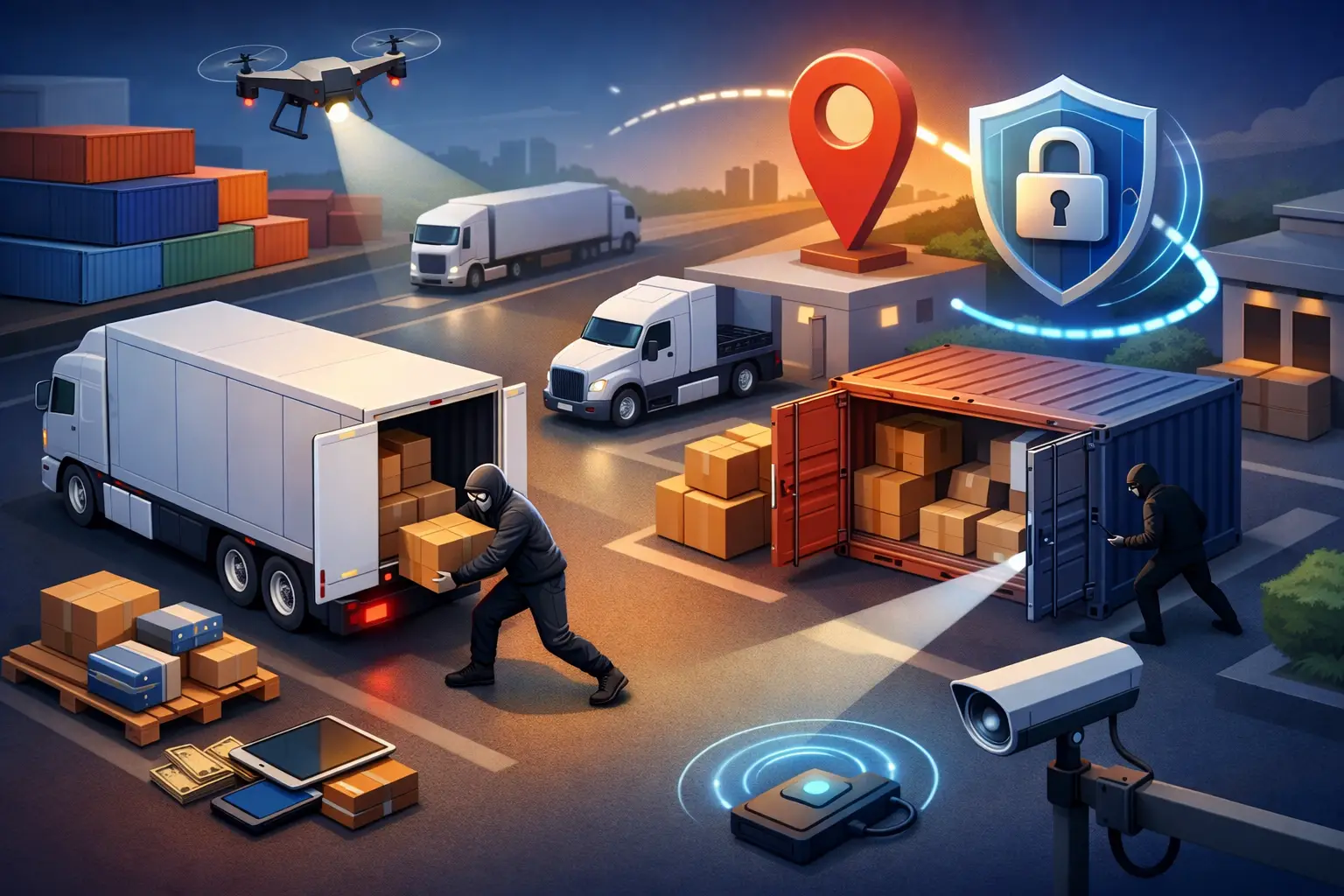
A reefer parked for 22 minutes at a routine stop can still become a six-figure claim. That is the reality behind cargo theft trends 2026. Theft crews are moving faster, choosing targets more carefully, and exploiting the same weak points many fleets still leave exposed – door hardware, unsecured parking, identity gaps, and inconsistent trailer security standards.
For carriers, private fleets, and logistics operators, the threat is no longer limited to obvious hot spots or full trailer disappearances. The bigger shift is precision. Organized crews increasingly know what they want, when a load is vulnerable, and how to access cargo without creating much delay at the scene. That changes the security conversation. It is not enough to know theft is rising. The real issue is how theft methods are changing and where your operation is still easy to breach.
Cargo theft trends 2026 are getting more targeted
The broad pattern heading into 2026 is simple: less randomness, more intent. High-value and theft-sensitive freight remains the primary target, especially pharmaceuticals, electronics, temperature-controlled goods, consumer products, and selected food and beverage loads. These shipments move quickly, resell easily, and create large claims with a single hit.
That does not mean lower-profile freight is safe. Mixed loads, partials, and even basic dry van freight are still exposed when thieves see an easy entry point. In many cases, criminals are not choosing cargo because it is rare. They are choosing trailers because they are easy to open. Handle-based locking setups, plastic seals, and standard padlocks still fail too easily under real attack conditions.
This is where many fleets get the risk calculation wrong. They focus only on what is inside the trailer, when the first question should be how difficult the trailer is to breach. A load with moderate resale value can still be attractive if access is fast and resistance is weak.
Theft rings are shrinking attack time
One of the most relevant developments for 2026 is the compressed attack window. Criminals do not need hours. In many cases, they need minutes. They know drivers stop for fuel, food, paperwork, and mandatory breaks. They also know many trailers rely on security devices that protect the handle more than the door itself.
That distinction matters. If a lock can be defeated by attacking surrounding hardware, prying the door, or compromising external mechanisms, the trailer remains vulnerable even when a driver believes it is secure. Fast theft is profitable theft. The more quickly a crew can test, breach, and move cargo, the lower their exposure.
The method is changing as much as the volume
Theft risk in 2026 is not just about more incidents. It is about more capable methods. Strategic deception continues to grow, including identity fraud, pickup manipulation, and fictitious carrier schemes. But physical intrusion remains a major problem because once criminals have access to the trailer, the loss becomes immediate and expensive.
For many operations, the physical side of cargo security has been underbuilt for the threat level. That is especially true where fleets still treat locks as compliance items instead of hardened barriers. A cheap lock may satisfy a checklist. It does not stop an organized crew with tools and intent.
There is also a clear split between theft prevention and theft documentation. GPS, telematics, and surveillance help track events, investigate losses, and support claims. They do not physically keep the trailer shut. That is not a criticism of tracking technology. It is a reminder that visibility and resistance solve different problems.
Why trailer doors remain a primary weakness
Barn-door trailers, including dry vans and refrigerated units, remain attractive because the doors are the gateway to the payload. If the security approach centers on exposed handles or light-duty hardware, the attacker can focus on the mechanism instead of fighting the door.
That is why fleets are taking a harder look at how the trailer is actually secured. A stronger standard means securing the door itself with tamper-resistant hardware built to resist cutting, drilling, and picking. It also means reducing reliance on thin components that fail before the lock does. In practical terms, the weakest point decides the outcome.
Cargo theft trends 2026 put more pressure on fleet standards
As theft methods become more disciplined, fleet security can no longer be driver-dependent or location-dependent alone. Driver training matters. Parking policy matters. Route planning matters. But if two identical trailers are parked side by side, the one with a weaker physical barrier is still the easier target.
That is why 2026 will likely separate fleets into two groups: those operating with a defined cargo security standard and those still relying on inconsistent practices. A defined standard does not mean every load gets the same protocol. It means the minimum acceptable protection is clear across equipment, facilities, vendors, and drivers.
For some fleets, that standard will vary by lane, commodity, or customer requirement. That is reasonable. High-risk freight deserves higher controls. Still, a baseline matters because many thefts happen during ordinary movement, not exceptional conditions. The trailer that carries sensitive freight on Friday may be hauling general goods on Monday. Criminals often spot the equipment before they know the exact load.
Insurance and customer pressure are not going away
The operational fallout from theft is bigger than the cargo value. Insurance scrutiny rises. Deductibles hurt. Claims histories travel. Customer confidence drops fast when a shipment disappears or arrives compromised. For food, pharma, and temperature-controlled freight, even suspected unauthorized access can make a load commercially unusable.
That is one reason theft prevention has become a business protection issue, not just a security issue. Fleet owners are not only protecting freight. They are protecting service performance, margin, customer retention, and the credibility of their operation.
What a stronger response looks like in 2026
The right response is not panic buying or chasing every new gadget. It is building layered security around the points where theft actually happens. Start with the trailer. If the cargo area can be opened quickly, every other investment is carrying extra weight.
A stronger trailer security strategy typically includes hardened physical locks, disciplined parking controls, tighter load information handling, and consistent procedures for unattended equipment. For higher-risk freight, it may also include more restricted stop planning, verification protocols, and escalation rules for route changes or suspicious contact.
The trade-off is cost and operational friction. Stronger hardware costs more than basic devices. Better procedures can slow decisions at the margin. But compare that with a stolen shipment, rejected load, or customer escalation after a breach. Security measures should be judged against loss exposure, not just procurement price.
This is also where equipment choice matters. Purpose-built systems designed for cargo trailers offer a different level of protection than generic lock setups adapted from lighter-duty use. A security solution built around premium steel construction, hardened padlock integration, and direct door protection gives fleets a more defensible barrier than products that leave critical weaknesses exposed. Cargo Locks USA has built its approach around that principle because the attack point is the door, not just the handle.
Security decisions should match the theft profile
Not every fleet needs the same setup across every asset. A regional dry van operation hauling low-resale freight may prioritize broad baseline protection and parking discipline. A reefer fleet moving pharmaceuticals or premium food products may need a much tougher physical standard and tighter access control.
The key is not overcomplicating the response. It is matching protection to actual theft exposure. If your trailers regularly sit loaded in yards, truck stops, drop lots, or overnight staging areas, physical resistance becomes central. If your biggest vulnerability is pickup fraud, identity verification takes a larger role. Most fleets need both, but not always in equal measure.
The practical question for fleet leaders
The most useful question for 2026 is not whether cargo theft will remain a threat. It will. The better question is whether your current equipment and procedures force a thief to move on.
That standard is more demanding than many fleets are used to. It means looking past seals, appearances, and low-cost hardware that creates a false sense of protection. It means testing whether the trailer can actually withstand cutting, drilling, prying, and picking attempts long enough to disrupt the attack. And it means recognizing that a visible, hardened barrier can deter theft before the first tool ever comes out.
Cargo theft is a business where criminals look for speed, weakness, and low risk. Fleets do not need perfect security to improve outcomes. They need stronger barriers at the point of attack, clearer standards across equipment, and the discipline to treat cargo protection like the revenue defense strategy it is. The operators who make that shift now will be in a better position when 2026 puts even more pressure on every weak trailer in the yard.