A trailer can look secured from 20 feet away and still be one cut, twist, or pry away from a full cargo loss. That is the real issue behind handle lock vs door lock decisions. For fleets moving high-value freight, the difference is not cosmetic. It is the difference between protecting a vulnerable component and securing the actual point of entry.
Too many cargo security setups still rely on handle-based solutions because they are familiar, quick to install, and widely available. The problem is simple. Trailer handles are exposed hardware. If a thief can attack the handle assembly, the lock may stay intact while the trailer still gets opened. That is a bad security model for any operation carrying pharmaceuticals, refrigerated freight, consumer goods, or anything else that attracts organized theft.
Handle lock vs door lock: what changes in real use
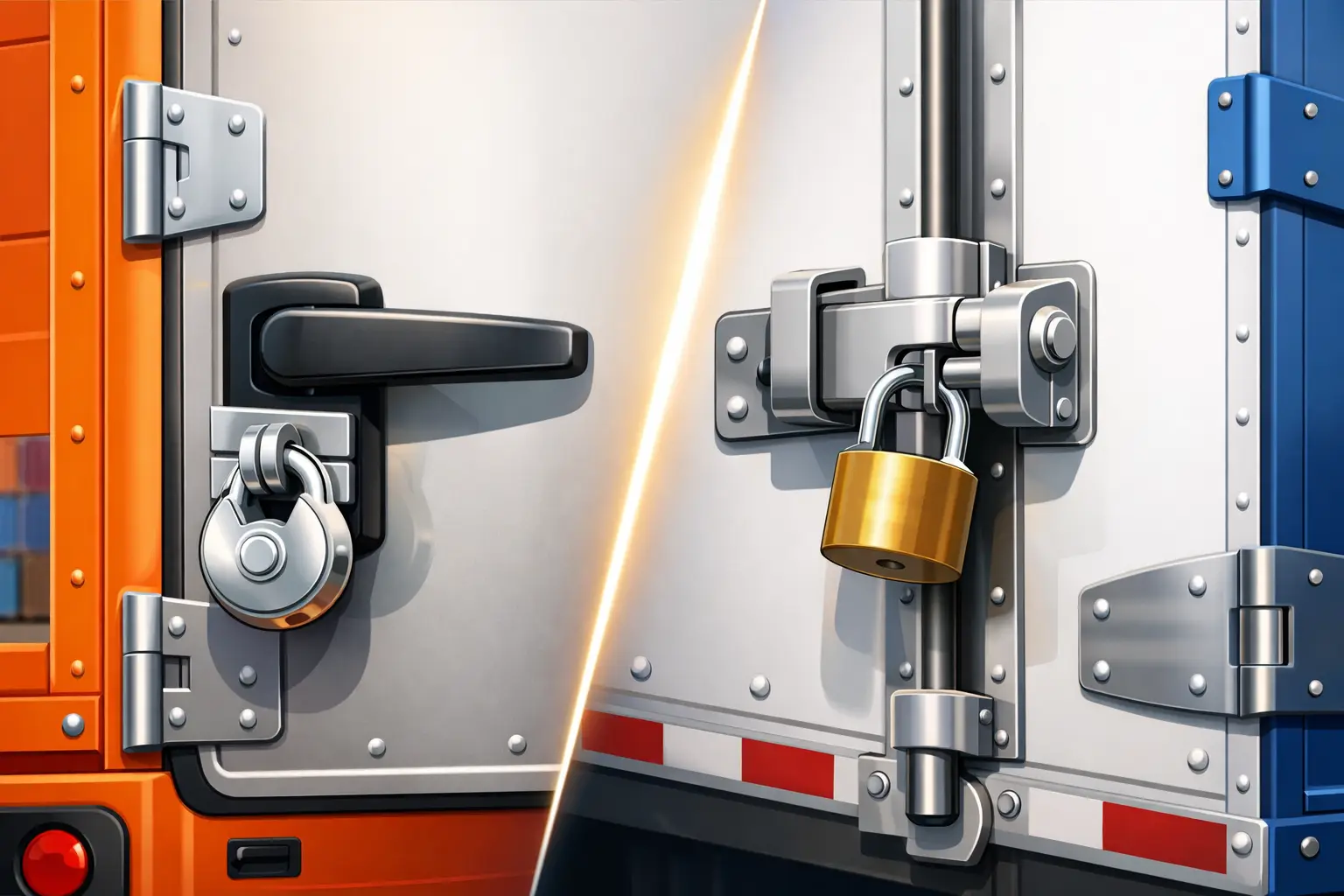
A handle lock secures the locking handle or the hasp area around it. On many trailers, that means the device is protecting the vertical rod system or preventing the handle from rotating. It can slow down casual tampering, and in some cases it serves as a visible deterrent. But its protection is tied to the strength of the handle assembly itself.
A door lock works differently. It secures the trailer door directly, not just the handle mechanism used to operate it. That distinction matters because the door is the asset access point. If the goal is theft prevention, the strongest solution is the one that controls door movement even if the handle hardware is attacked.
This is where many fleets underestimate the threat. Criminal crews do not test security the way a buyer does in a parking lot. They look for weak geometry, exposed metal, predictable attack points, and the fastest path to access. If the handle is easier to defeat than the lock body, they will go after the handle.
Why handle-based security often fails first
The core weakness in a handle lock setup is that the handle system becomes part of the security chain. On paper, the lock may have solid specs. In the field, the surrounding hardware may not.
Trailer handles and rod systems can be cut, bent, spread, or manipulated depending on trailer age, hardware condition, and attack tools. Even where the lock itself resists picking or cutting, the thief may not need to defeat the lock directly. If they can compromise the handle assembly, they can sometimes create enough movement to open the door or partially breach it.
That creates a major mismatch between perceived security and actual security. Operations teams may believe a locked handle means the load is protected. In reality, the protected component may be the least important part of the entry system.
This is one reason simple seals, standard padlocks, and handle-only devices often fail to meet the risk profile of modern cargo theft. Theft crews are faster, more mobile, and more selective than many security plans assume. They do not need a perfect opening. They need access.
Door lock systems protect the point that matters
A true door lock approach secures the barn door itself. That means the security device is built around denying door movement, not just preventing handle rotation. It shifts the defense from exposed operating hardware to the actual barrier between the cargo and the thief.
For dry vans and reefers, that is a serious upgrade in defensive logic. If a thief damages the handle but still cannot open the door, the lock has done its job. The freight remains protected, and the loss event may be limited to equipment damage instead of a full stolen load.
This is the difference between accessory security and structural security. One tries to guard a control point. The other holds the door closed under attack.
For fleets, that difference has direct financial consequences. A stronger locking method can reduce cargo loss exposure, support insurance conversations, and provide a more defensible standard when customers ask what physical security measures are in place.
Handle lock vs door lock for high-risk freight
Not every load attracts the same level of targeting. If a trailer is carrying low-theft-risk goods and operating in lower-exposure lanes, a handle lock may appear sufficient for a time. But that is not how most logistics leaders should assess security.
The better question is what happens when the trailer, route, dwell time, or commodity changes. A system that only works under light threat conditions is not much of a security strategy. It is a convenience product.
High-risk freight needs a locking method that assumes determined attack. Pharmaceuticals, electronics, temperature-controlled products, branded consumer goods, and loads with predictable resale value are all worth stronger physical protection. Once a trailer is parked overnight, staged in a yard, or left at a customer location, the lock is standing in for your entire security policy.
That is where door-first protection earns its value. It does not depend on the integrity of a more vulnerable handle assembly. It addresses the attack where it matters most.
The business case is bigger than theft alone
When cargo is stolen, the immediate loss is obvious. The secondary damage is often worse.
A single breach can trigger claim activity, customer friction, late-delivery penalties, rejected product, lane disruption, and more scrutiny from insurers and partners. If the stolen cargo includes sensitive or temperature-controlled goods, the operational fallout can spread fast. You are not just replacing product. You are dealing with service failures, damaged trust, and harder renewal conversations.
That is why handle lock vs door lock should be treated as a business decision, not a hardware preference. Security that protects the door directly gives fleets a stronger position when evaluating loss prevention standards. It also signals that cargo protection is being handled at a professional level, not with the minimum visible deterrent.
For many operators, the cost of better hardware is minor compared with the cost of one targeted event.
What to look for in a serious cargo door lock
Not every door lock system is built for commercial freight risk. The design details matter.
Material strength comes first. Premium steel construction matters because theft attempts often begin with force, not finesse. If the system can be cut, peeled, or deformed quickly, the label does not matter.
Padlock protection is just as important. Hardened, high-security padlocks that resist cutting, drilling, and picking raise the attack time and tool requirement. That is critical in yards, truck stops, drop lots, and delivery environments where criminals rely on speed.
Fit and application matter too. A security system for barn doors should be designed for the actual trailer configuration, not adapted from a lighter-duty use case. If installation is awkward or inconsistent across the fleet, security discipline usually degrades over time.
This is where purpose-built systems stand apart. Cargo Locks USA focuses on locking the trailer door itself, backed by premium U.S. steel construction and high-security padlock integration. That design approach addresses the core weakness of handle-based protection rather than trying to reinforce it.
When a handle lock may still have a place
There are situations where a handle lock can still serve a role. Lower-risk applications, temporary use, or layered deterrence strategies may justify one. If the goal is simply to discourage casual access in a controlled environment, handle security can add friction.
But fleets should be honest about the limitation. A handle lock is not the same as a true door lock, and treating those options as equivalent creates unnecessary exposure. If the freight is valuable, the route is exposed, or the trailer spends time unattended, direct door security is the stronger standard.
That is the trade-off. Handle-based systems may offer convenience and lower upfront cost. Door-based systems offer stronger physical control over the point of entry. For commercial operators, that usually matters more.
The right question to ask before you buy
Do not ask whether the lock looks tough. Ask what actually stays secured if the handle is attacked.
That question cuts through marketing fast. If the answer is only the handle assembly, the protection may be weaker than it appears. If the answer is the trailer door itself, you are evaluating a more serious security solution.
Cargo theft is not slowing down, and freight operators cannot afford security theater. The smarter move is to protect the point of entry that thieves actually need. When you lock the door instead of the handle, you are building security around the load, the route, and the business consequences that follow if protection fails.
The best cargo security decisions are the ones that still hold up after the first attack, not just the first inspection.