Cargo theft rarely looks dramatic at first. A trailer is left in a yard, at a truck stop, or outside a warehouse for a few hours, and by the time anyone notices, the doors have already been breached. That is exactly why a tamper resistant trailer lock matters. If a lock can be defeated quickly with bolt cutters, pry tools, or attacks on the door handle assembly, it is not protecting freight – it is only delaying loss by a few minutes.
For fleet operators, trailer managers, and logistics leaders, the question is not whether a lock exists on the door. The real question is whether that lock changes the risk profile of the trailer in a meaningful way. A serious security system has to do more than look heavy-duty. It has to force more time, more noise, more effort, and more exposure on the attacker.
A tamper resistant trailer lock should protect the door, not just the hardware
This is where many trailer security products fall short. A large number of common solutions secure the handle or latch mechanism, but they do not truly secure the trailer door itself. That distinction matters. If the criminal can attack the handle assembly, manipulate rods, or create enough movement around the latch points, the lock may remain in place while the trailer is still opened.
A better approach is door-first security. When the locking system physically secures the door rather than relying on the exposed handle system, it closes off one of the most common weaknesses in trailer protection. From a business standpoint, that is more than a design preference. It is the difference between a visual deterrent and a genuine theft barrier.
This is especially critical for dry vans and refrigerated trailers carrying high-value freight. Pharmaceuticals, electronics, food products, and consumer goods are all attractive targets because thieves know they can be moved quickly. If your security depends on a vulnerable handle setup, your cargo is exposed even when the trailer appears locked.
The materials tell you whether the lock is serious
Not every steel lock is truly built for commercial cargo security. Material quality, thickness, and design geometry all affect how well a system stands up to real attacks. A lock marketed for utility trailers or light recreational use is often not enough for commercial freight operations where organized theft crews may arrive with battery-powered tools and a plan.
A true tamper resistant trailer lock should use premium steel construction with enough mass and strength to resist bending, prying, and cutting attempts. It should also shield vulnerable components rather than leaving them exposed. A lock body with large open areas, weak welds, or thin sidewalls gives attackers obvious points to target.
There is also a practical trade-off here. Heavier, more secure systems are not as cheap or as simple as basic hasps and commodity padlocks. But freight security is not the place to optimize for the lowest upfront cost. One compromised load can cost far more than the price difference between a minimal deterrent and a purpose-built locking system.
The padlock matters as much as the housing
A lock system is only as strong as its most vulnerable point. In many trailer security setups, that weak point is the padlock. If the padlock shackle is exposed, poorly hardened, or easily picked, the rest of the assembly may not matter.
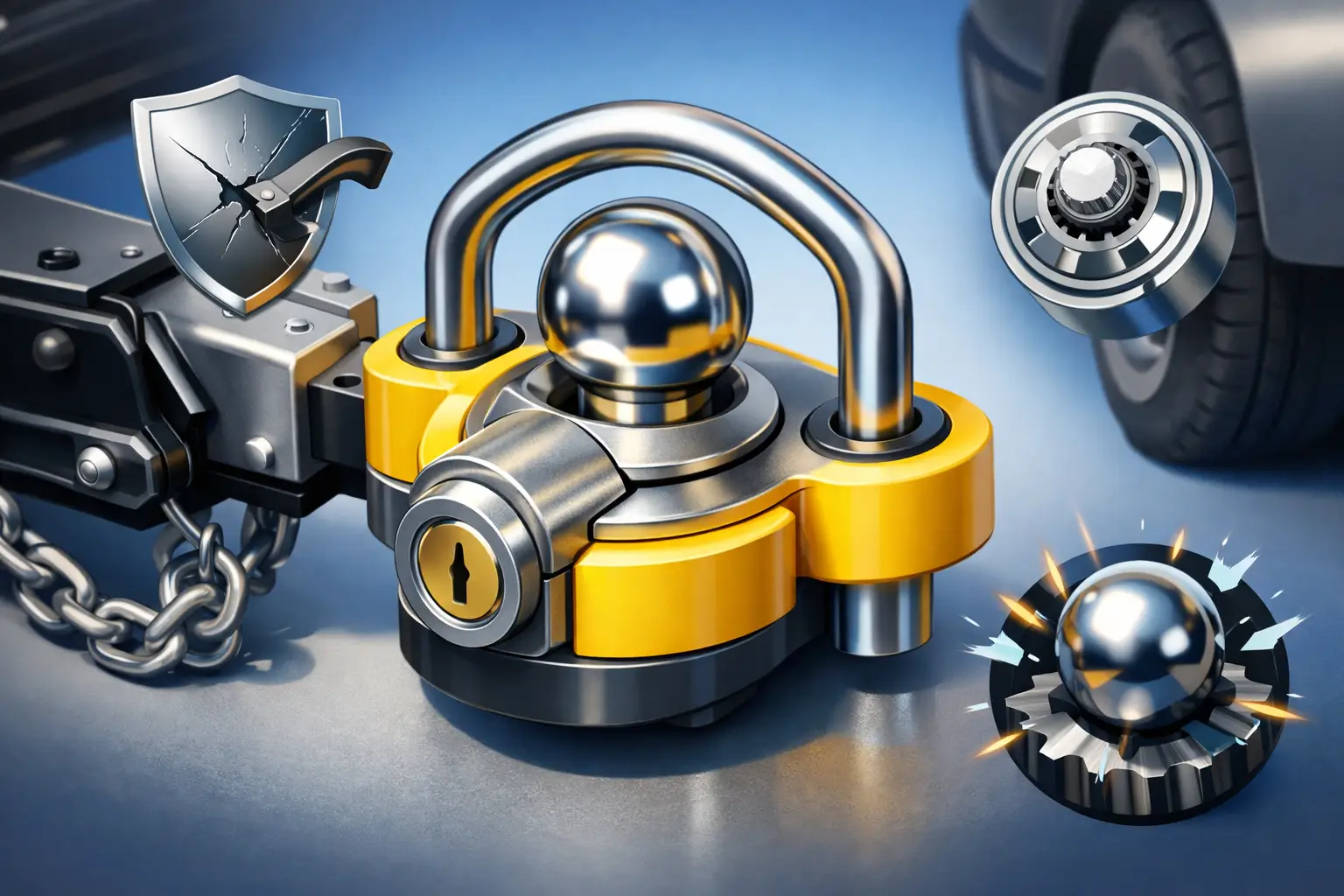
That is why high-security trailer protection often relies on hardened padlocks specifically engineered to resist cutting, drilling, and picking. The lock should not be treated as an afterthought or a generic add-on. It should be part of the security strategy from the start.
For commercial fleets, this is where specification discipline matters. A lock housing paired with a low-grade padlock creates a false sense of security. By contrast, a hardened padlock with protected geometry and strong attack resistance helps ensure the entire system performs as intended under pressure.
In practice, the best systems reduce access to the shackle, limit tool engagement, and force an attacker into slower, louder methods. That extra time is valuable. Cargo theft often depends on speed and low visibility. The harder it is to get clean tool contact, the less attractive the trailer becomes.
Tamper resistance is about attack resistance, not marketing language
The term tamper resistant gets used loosely, and buyers should be careful. A product can have a heavy appearance and still fail under real conditions. Security hardware should be judged by the attacks it is designed to resist.
For trailer applications, the main threat categories are usually cutting, prying, drilling, picking, and bypassing weak mounting or latch points. If the product description does not clearly address those attack paths, there is a good chance the security claim is doing more work than the hardware itself.
This is where commercially minded buyers tend to ask the right questions. What part of the trailer is actually secured? What tools is the system built to resist? Are vulnerable lock components shielded? Is the system built for repeated field use on active freight equipment, or is it closer to consumer-grade hardware dressed up for commercial sales?
A serious answer to those questions will usually separate a purpose-built trailer lock from a generic deterrent.
Why trailer theft prevention needs a higher standard
Cargo loss is not limited to the value of the product on the trailer. A theft event can interrupt delivery schedules, trigger claims, damage shipper confidence, and increase insurance pressure across the operation. For fleets moving temperature-sensitive or time-critical freight, the downstream damage can be even worse. A stolen or compromised load does not just disappear from inventory – it can take customer trust with it.
That is why physical security should be evaluated as part of a broader risk-control strategy. If your trailers are parked overnight, staged in drop lots, or left waiting at distribution points, your locking system is carrying a bigger burden than many teams realize. Basic seals and standard locks may satisfy a procedural checkbox, but they do little against determined theft.
A stronger locking standard also helps support internal accountability. When a fleet invests in higher-grade trailer security, it sends a clear message to drivers, yard personnel, customers, and insurers that cargo protection is being treated as a business-critical control.
What to look for in a tamper resistant trailer lock
The strongest systems tend to share a few traits. They secure the trailer door itself, they use premium steel construction, and they pair the housing with a hardened high-security padlock rather than an off-the-shelf substitute. They are also designed for commercial trailers with barn doors, where the lock has to work reliably in daily operations without becoming a maintenance problem.
Ease of installation matters too, but not in the way low-cost products advertise it. Fast installation is helpful, but only if it does not compromise strength. The right system should be practical for fleet use while still delivering meaningful physical resistance.
It also helps to think in terms of deterrence and delay. No physical device can promise absolute prevention in every scenario. What it can do is make your trailer a much harder target, increase the time and noise required to attack it, and push criminals toward easier opportunities. In real-world cargo security, that shift matters.
Companies that move high-risk freight should pay particular attention to whether the system was designed for commercial transport from the ground up. That means trailer-specific geometry, attack-resistant locking points, and materials selected for hard service environments across North America. It also means moving beyond handle-only solutions that leave too much of the door security equation exposed.
This is the standard serious operators should be aiming for. Cargo Locks USA has built its approach around that reality, with a door-focused system, premium U.S. steel construction, and a hardened padlock configuration intended to resist the attacks that commonly defeat lighter-duty products.
A tamper resistant trailer lock is not just another accessory on the rear of a trailer. It is a visible part of your theft prevention posture, your loss control strategy, and your customer protection standard. If the freight is worth hauling, it is worth securing with hardware that forces criminals to work harder than they planned.