Cargo theft rarely starts with a Hollywood-style break-in. More often, it starts with a parked trailer, a weak locking point, and a thief who knows exactly where standard equipment fails. If you need to improve fleet trailer security, the real job is not adding another visible deterrent. It is closing the specific attack paths criminals already use against barn doors, swing-door hardware, and unattended equipment.
For fleet operators, this is a business decision with direct financial consequences. A stolen load can trigger missed delivery windows, insurance claims, customer escalations, replacement freight costs, and hard questions about your security standards. One exposed trailer can become a chain reaction across operations.
Where fleet trailer security usually breaks down
Most fleets do not have a security problem because they do nothing. They have a security problem because they rely on measures that look acceptable during an audit but fail under real physical attack. Plastic seals show tampering after the fact. Basic padlocks can often be cut. Handle-based locks create a false sense of security because they secure the hardware around the door, not always the door itself.
That distinction matters. On many trailers, the handle assembly is the weak point. If an attacker can defeat or bypass the handle mechanism, the lock did its job on paper but not in practice. That is why fleets moving high-value freight, pharmaceuticals, consumer goods, or temperature-controlled cargo need to think beyond standard locking habits.
The first step is being honest about exposure. Are trailers spending long periods dropped in yards? Are drivers parking overnight in unsecured locations? Are loaded reefers sitting in predictable lanes? The right control depends on how and where your trailers are actually at risk.
How to improve fleet trailer security in practical terms
The strongest fleet security plans combine physical hardening with operating discipline. Either one without the other leaves gaps.
Start with the lock itself. A serious trailer security system should resist cutting, drilling, and picking, and it should protect the actual door from forced access. That means looking closely at what is being locked. If the device only wraps the handle, you may still be leaving the door vulnerable to the exact methods experienced thieves prefer.
Material quality also matters more than many buyers assume. Steel thickness, shrouded lock design, padlock protection, and resistance to prying all affect whether a thief moves on or keeps working. Cheap hardware often fails quickly under battery-powered tools. Premium construction does not make a trailer invincible, but it changes the time, noise, and effort required. In cargo theft, that change is often enough to stop the attempt or push it toward an easier target.
Operationally, fleets should assign security levels by risk instead of using one standard across every trailer. A dropped dry van in a low-risk lane does not face the same threat profile as a loaded reefer carrying regulated goods. When every trailer gets the same controls, high-risk equipment stays underprotected and security spending gets diluted.
Lock the door, not just the handle
This is where many security conversations get too soft. If the attack point is the trailer door, then the security strategy should center on the trailer door.
A lock that secures the door itself addresses a major weakness in common trailer protection. It reduces reliance on external handle assemblies that can be manipulated, damaged, or bypassed. For fleets under pressure to demonstrate more defensible cargo protection standards, this is a stronger position to take with customers, insurers, and internal risk teams.
That does not mean every trailer needs the exact same locking solution. It does mean buyers should pressure-test the design. Ask what happens if the handle is attacked. Ask whether the padlock is exposed. Ask how much of the lock body is vulnerable to cutting tools. Ask whether the system is built for daily commercial use or occasional light-duty use.
A purpose-built trailer lock should answer those questions clearly. Cargo Locks USA has built its approach around that exact weakness by focusing on systems that lock the trailer door rather than relying on handle-only methods. For many fleets, that is the kind of design shift that turns security from cosmetic to meaningful.
Procedures matter because thieves study routines
Even the best lock can be undermined by predictable operations. Fleet trailer security gets weaker when drivers, yard teams, and dispatch make convenience-based exceptions that slowly become normal.
Unsecured drop lots, repeated parking patterns, and inconsistent lock use create opportunities. Thieves watch for all of it. If a fleet only uses upgraded locks in certain regions, leaves loaded trailers unattended during specific windows, or skips physical checks at transfer points, patterns develop fast.
The fix is not complicated, but it does require discipline. Locking protocols should be mandatory, not situational. Yard checks should confirm not only trailer presence but lock condition. Dispatch and operations should know which loads require enhanced controls before the trailer is assigned, not after it is parked. If security steps depend on memory or driver preference, compliance will drift.
Training should also reflect reality. Teams need to understand common attack methods, signs of attempted entry, and what to do when lock hardware appears compromised. Security works better when staff know what failure looks like before a theft occurs.
Improve fleet trailer security with risk-based equipment standards
Not all upgrades produce equal results. Fleets often spend money on tracking, cameras, seals, and yard lighting while leaving the physical entry point underdefended. Those tools have value, but they serve different purposes.
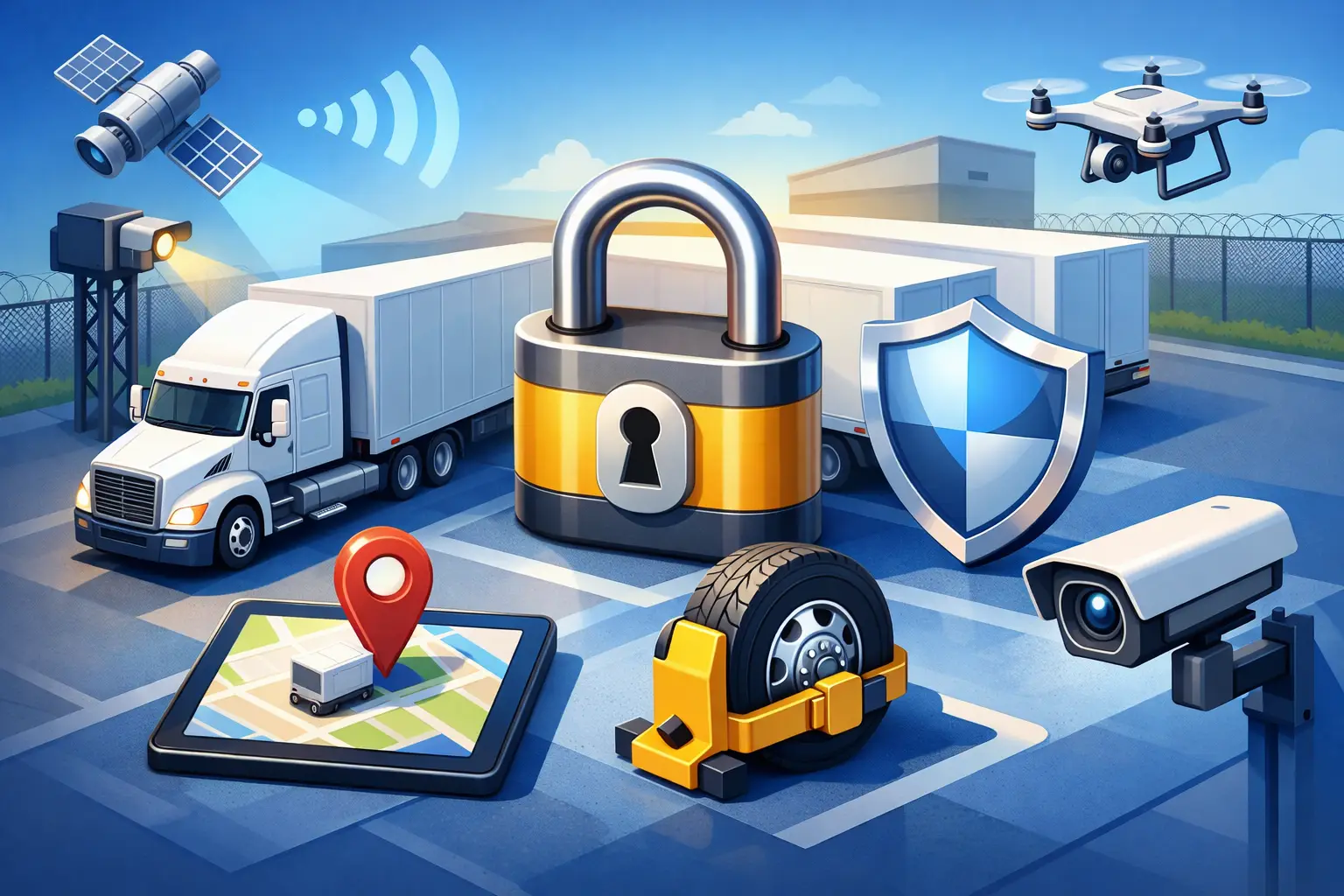
Tracking helps recover equipment or identify movement. Cameras support investigation. Seals indicate tampering. Lighting improves visibility. None of those physically stop a trailer door from being opened. If your goal is theft prevention, the door and locking system deserve first priority.
That does not mean technology should be ignored. It means fleets should stack controls in the right order. Physical entry resistance comes first. Visibility and monitoring come next. Recovery tools matter, but recovery is the stage after prevention has already failed.
A practical standard for higher-risk trailers often includes hardened locking hardware, protected padlocks, documented lock-use procedures, parking controls, and inspection checkpoints. Lower-risk assets may justify a lighter standard. The point is to match the defense to the cargo and the lane instead of treating all exposure as equal.
The insurance and customer side of the equation
Security upgrades are often evaluated only as product cost, which is too narrow. The better question is what weak trailer security is already costing the business.
One theft event can bring cargo loss, claim administration, service disruptions, expedited replacement freight, and customer distrust. In some sectors, especially pharmaceuticals and temperature-sensitive freight, an intrusion can also compromise product integrity even if the load is partially recovered. At that point, the loss is not just inventory. It is credibility.
Insurers and shippers are paying attention to this. They want to see security controls that are specific, consistent, and defensible. A fleet that can show hardened door-level protection, formal procedures, and stronger tamper resistance is in a better position than one relying on commodity hardware and basic seals.
There is a trade-off, of course. Stronger locking systems add upfront cost and can require installation planning across mixed trailer types. But compared with repeated exposure to theft-prone freight, that cost is usually easier to justify than another avoidable claim.
What to look for before you upgrade
The right security upgrade should fit commercial operations, not fight them. If a lock is too cumbersome, compliance falls. If installation is inconsistent, protection becomes uneven across the fleet. If replacement components are hard to source, downtime increases.
Buyers should evaluate how the system performs in the field, how it integrates with existing trailers, and whether the hardware is engineered for repeated use under weather, vibration, and daily driver handling. Construction quality is not a marketing detail. It is the difference between a lock that holds up and one that becomes the next weak point.
Made in the USA manufacturing, premium steel construction, and hardened padlock compatibility also matter for fleets that want stronger quality control and proven physical resistance. Those details support a more credible security standard when risk managers or customers ask what is actually protecting the load.
Trailer security is not about making theft impossible. It is about making your equipment materially harder to defeat than the trailer next to it, while backing that hardware with procedures your team will actually follow. The fleets that get this right are not chasing appearances. They are reducing opportunity, forcing better outcomes, and protecting revenue where it is most exposed.